
Description
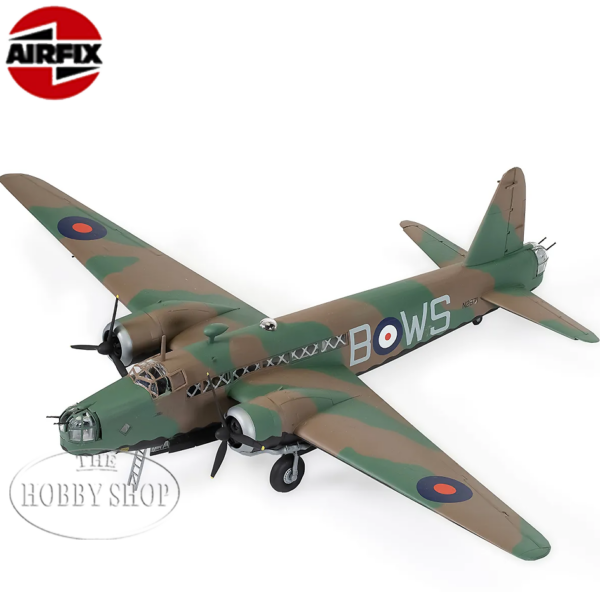
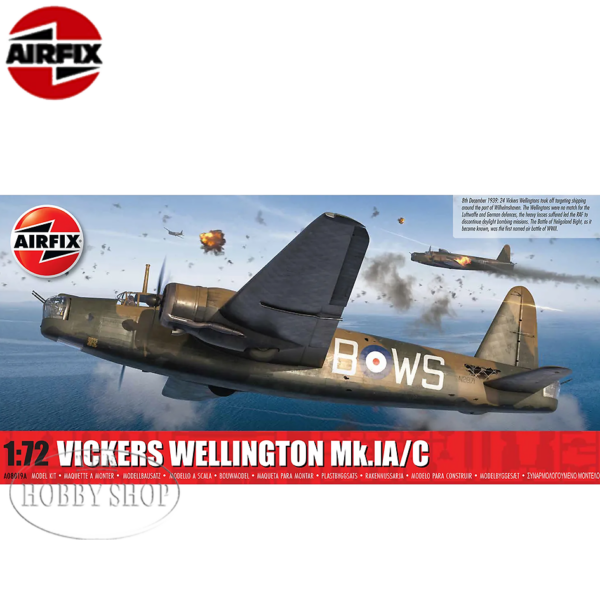
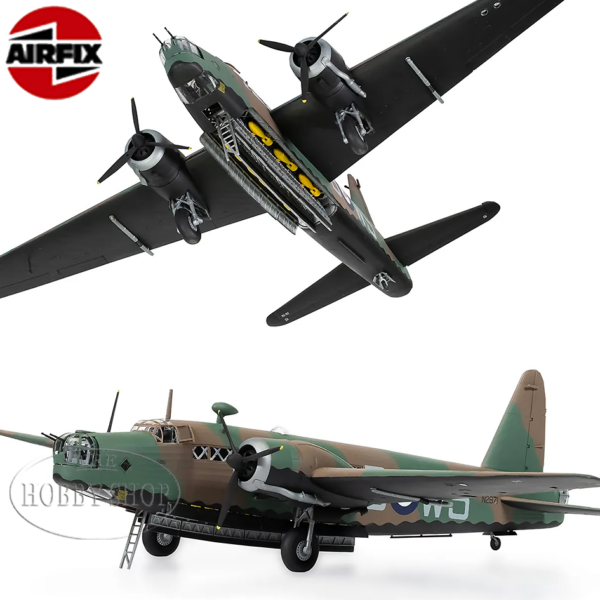
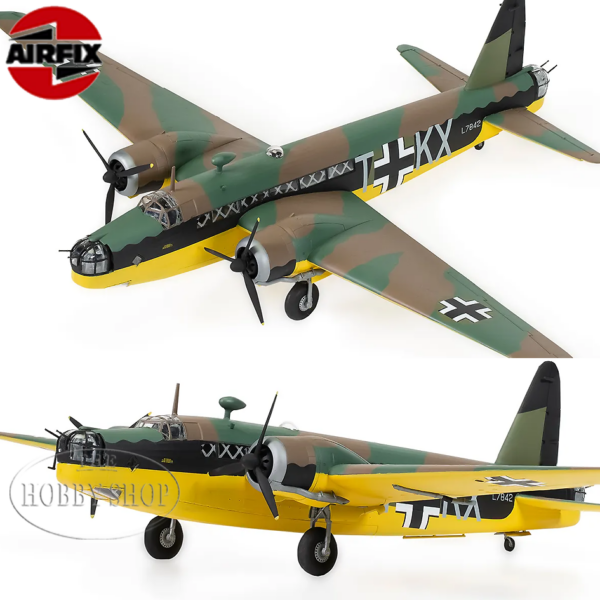
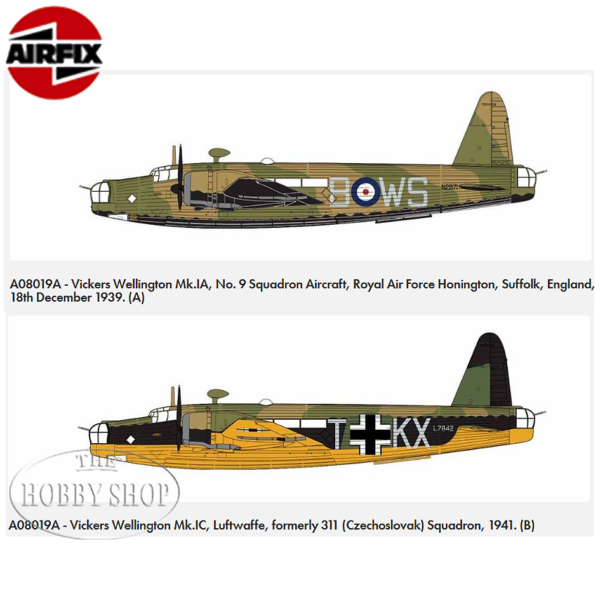
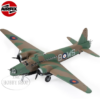
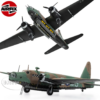
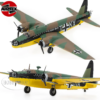
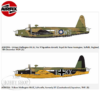
This remarkable 1:72 scale model of the Vickers Wellington Mk.IA/C captures the essence of one of the most sophisticated medium bombers of its time. Comprising 141 parts, it assembles into a detailed replica with a wingspan of 364mm. The twin-engine Wellington took its maiden flight in 1936 and joined the RAF with No.99 Squadron at Mildenhall in October 1938, marking a considerable advancement in bomber technology with its streamlined monoplane structure and substantial defensive weaponry. Designed for modellers aged 8 and up, this skill level 3 kit allows you to construct one of two genuine World War Two liveries.
Key Features
141 components depicting the unique geodetic framework and streamlined monoplane form
1:72 scale model with a 364mm wingspan
Includes two genuine World War Two liveries
Skill level 3 kit suitable for modellers aged 8 and above
Detailed portrayal of the twin-engine medium bomber layout
Plastic model showcasing the Wellington’s advanced characteristics
History
The Vickers Wellington was the leading medium bomber of its era, first taking flight in 1936 and joining the RAF with No.99 Squadron at Mildenhall in October 1938. The production model differed significantly from its prototype, and when compared to other medium bombers of the time, the Wellington was seen as more advanced and a formidable opponent. Its streamlined monoplane design and robust defensive armament established the Wellington as one of the most sophisticated and capable medium bombers globally.
A notable aspect of the Wellington’s design was its use of a geodetic construction technique, pioneered by renowned British engineer and inventor Barnes Wallis. This involved using Duralumin W-beams to create a metal lattice structure, onto which wooden battens were affixed, allowing the doped fabric outer skin to be attached.
The resulting fuselage was both lightweight and exceptionally strong. Although this construction method posed challenges for manufacturers, the inherent strength was vital when the aircraft faced combat situations.
Able to endure substantial battle damage, many RAF Wellingtons successfully returned their crews home, when other bombers might not have managed.