
Description
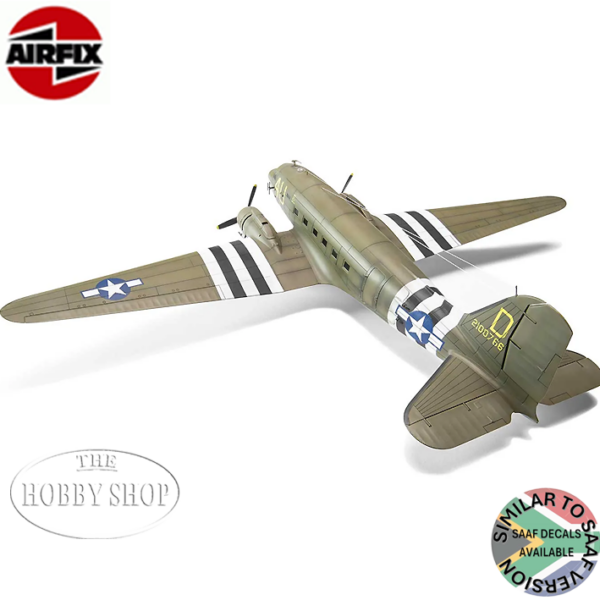
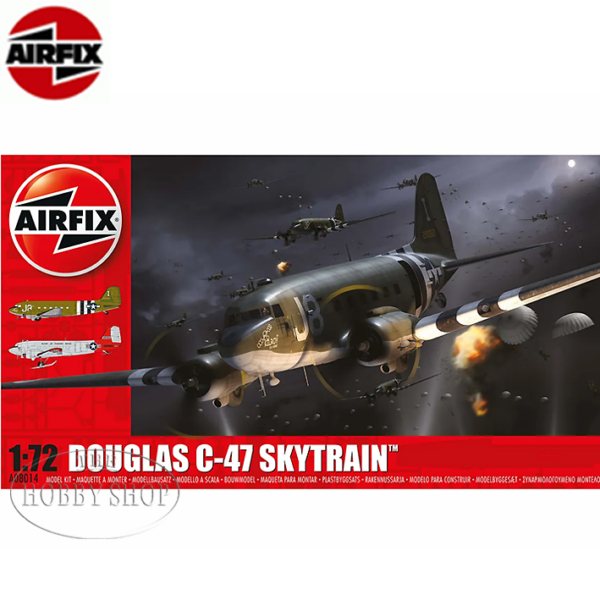
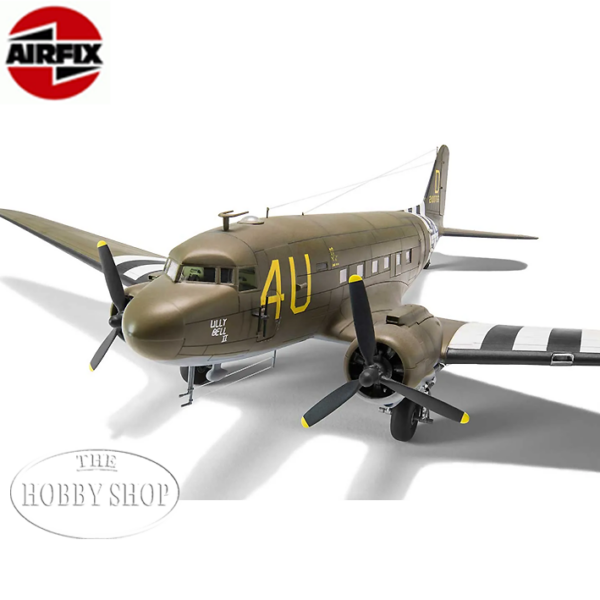
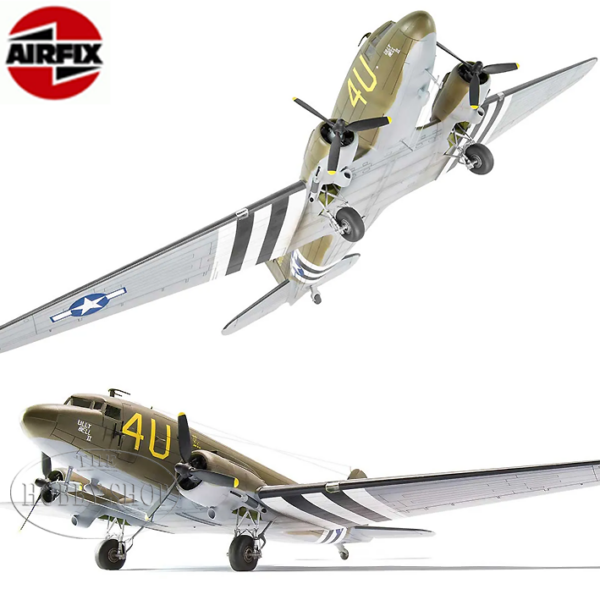
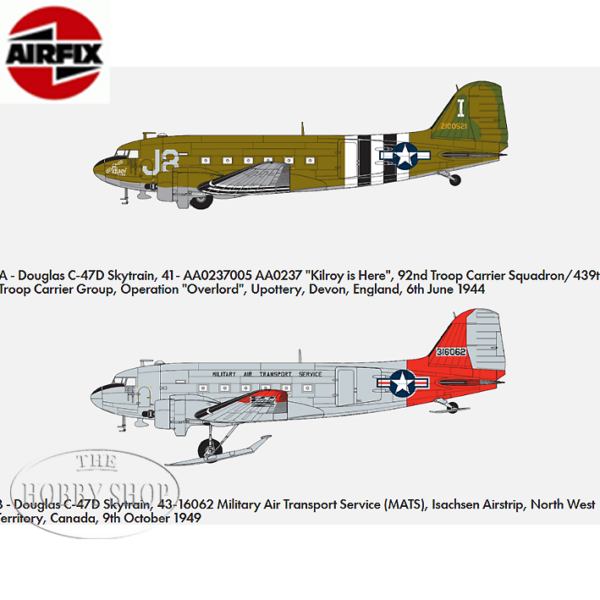
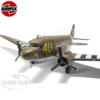
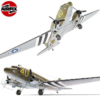
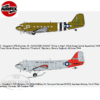
This remarkable 1:72 scale model kit of the Douglas C-47 Skytrain captures the essence of one of the most renowned transport planes in history. Comprising 142 components, this skill level 3 kit provides modellers with a rewarding assembly experience, boasting a wingspan of 400mm and offering two genuine paint options.
Key Features
1:72 scale model kit featuring 142 intricately detailed plastic parts
Skill level 3 build designed for modellers aged 8 years and older
Offers a selection of two genuine paint options
Impressive wingspan of 400mm upon completion
Transport aircraft from the World War Two era
Included in the D-Day and U.S.A.A.F. collections
History
General Eisenhower once referred to the Douglas DC3 and its military version, the C-47 Skytrain (known as Dakota in RAF service), as one of the four tools that enabled the Allies’ victory in the Second World War. This aircraft has since become a lasting emblem of both aviation and the liberation efforts during the war. The DC3/C-47 continues to operate today, both in updated and original forms, and is celebrated as a trailblazer in air travel.
The ‘Dak’ has seen service for over 70 years in South Africa and for some of that time, the South African Air Force (SAAF) had the distinction of operating the largest remaining fleet of Dakotas in the world. The aircraft entered South African service in 1943 when the RAF passed a number of their fleet onto the SAAF, which, until then, had been struggling through the war with a miscellany of Junkers Ju-52s, Vickers Valentias and Lockheed Lodestars. By the end of the war, a total of 84 Lend-Lease Dakotas had been transferred to the SAAF.
Nos 28 and 44 Squadrons, SAAF, both of which had been formed atAlmaza in Egypt in June 1943 and March 1944 respectively, operated the Dakota during the war. During the last year of the war, No 28 Squadron operated from Castel Benito in Tunisia until June 1944 when it moved to Maison Blanche in Algeria. From there the aircraft flew routes covering North Africa, the Western Mediterranean, Italy and France. No 44 Squadron operated as required from Khartoum, EI Adam, Habbanayah, Athens and Bari. A regular two week schedule was opened through Habbanayah via the Persian Gulf, returning along the South Arabian route via Khartoum. Special flights and diplomatic missions were flown to the Soviet Union, St Jean, Castel Benito, Turkey, Bucharest, Belgrade, Albania, Salonika, Marseille, Forli and Zara. In addition, medical provisions were transported to forward base hospitals near the front lines.
By October 1944, both squadrons were making new records in scheduled and unscheduled flights.
The onset of winter and the deteriorating weather failed to disrupt the performance of No 28 Squadron. Earlier that month, four Dakotas were grounded by weather at Naples while six other flights had to be cancelled. Despite this, the total flying hours of that month amounted to 3 148 while the numbers of transports on strength reached 29. Further east, No 44 Squadron found compensation for the poor weather in the Mediterranean by operating in the Persian Gulf where the monsoon period had come to an end and flying conditions were excellent. A total of 1 069 hours were flown by the Squadron on routine flights.
In December 1944, No 44 Squadron moved to Bari in Italy where it operated under 249 Wing. The aircraft dropped supplies regularly to partisans in Yugoslavia while escaped Allied POWs and wounded partisans were flown out on return. Landings would often be made on specially prepared airstrips or near enemy occupied territory. By March 1945, 1 000 partisan casualties had been evacuated and, in all, over 1 200 partisans were evacuated. In the nineteen months in which No 44 Squadron served in the operational theatre, the Squadron’s aircraft flew a total of 39 423 hours. At the end of the war, aircraft from both squadrons undertook the mammoth task of ferrying South African service personnel back home to the Union of South Africa (Pearcy, 1982, pp 101-2).