Description
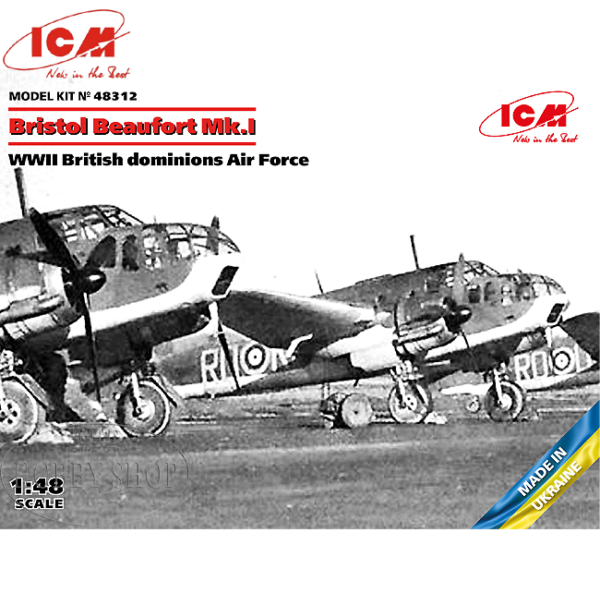
The Bristol Beaufort torpedo-bomber, which was widely used in the RAF Coastal Command, was also a part of the air units of the British Dominion countries. Thus, in August 1941, the 489th squadron was formed from pilots of the Royal New Zealand Air Force (RNZAF). They received several Bristol Beaufort Mk.I, which operated until the winter of 1942. In late 1941, 18 Beaufort Mk.I aircraft were received by the South African Air Force (SAAF) to protect the vital shipping lanes around the Cape of Good Hope. In the winter of 1942, two divisions were created in the SAAF – the 36th and 37th Coastal Flight, which included these aircraft. At first, they performed patrol functions and later were involved in combat operations against the French forces of the Vichy regime in the region of Madagascar. The Canadian Air Force (RCAF) also operated the Beaufort BeaufortMk.I – these were the 415th and 149th squadrons. Canadian Beauforts were used until 1943, engaging in patrol flights and solving anti-submarine defense tasks.
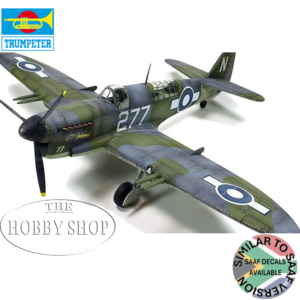
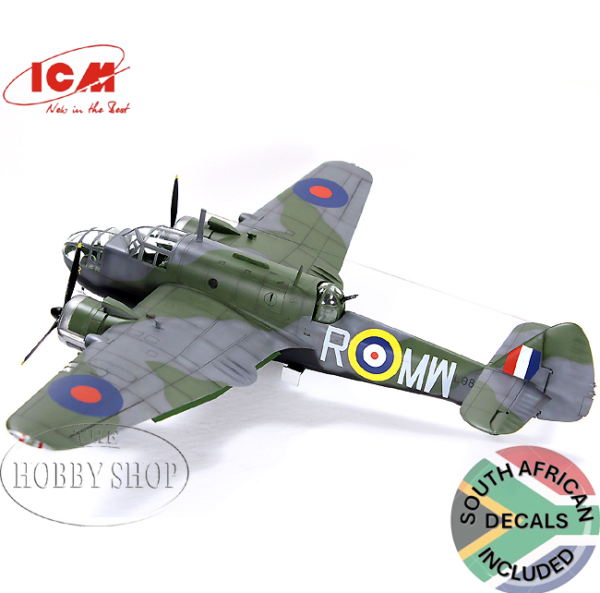
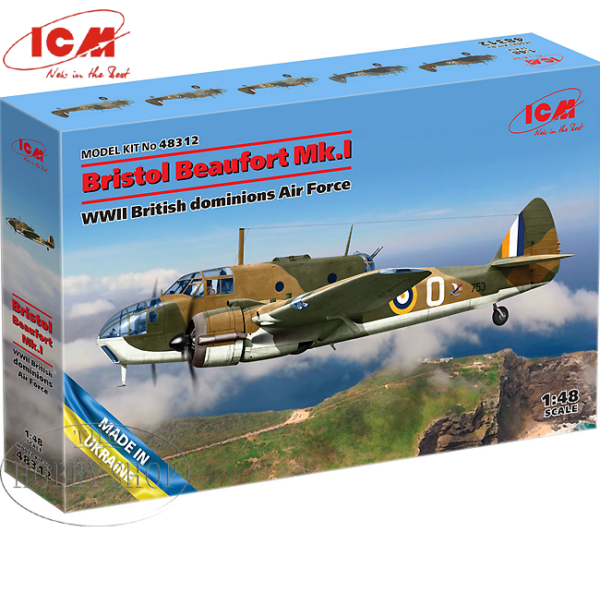
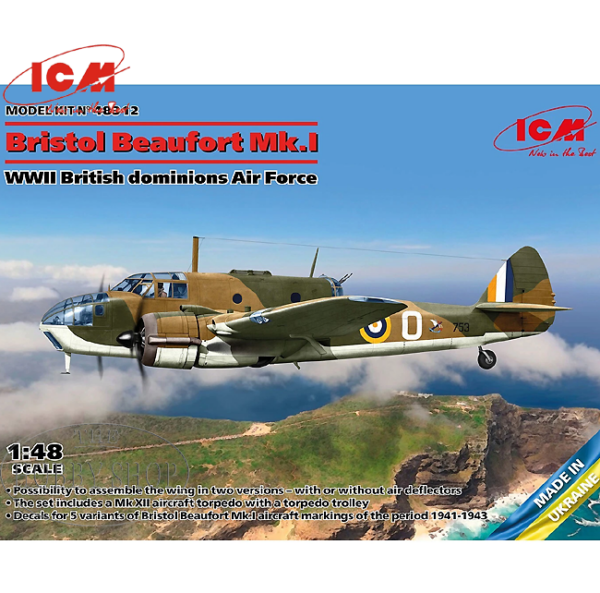
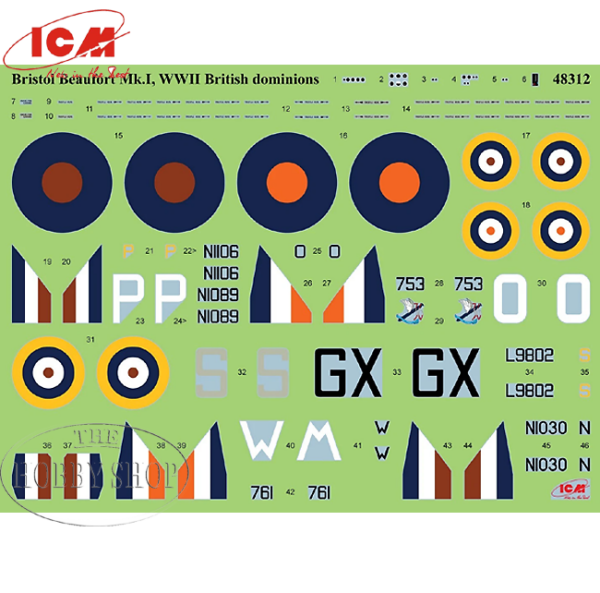
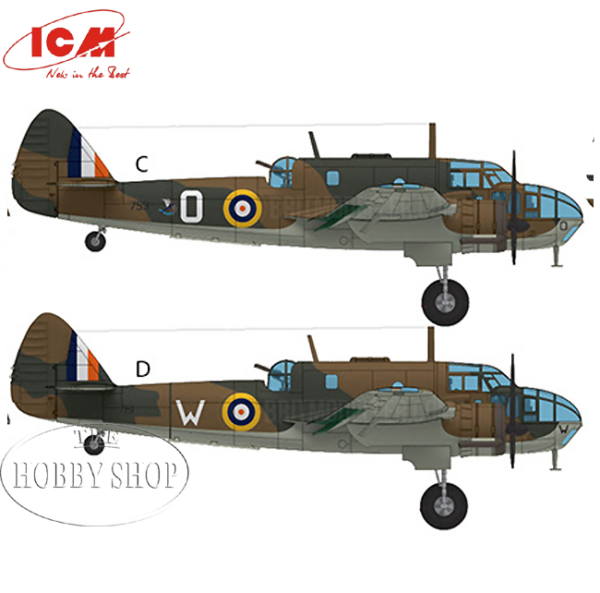
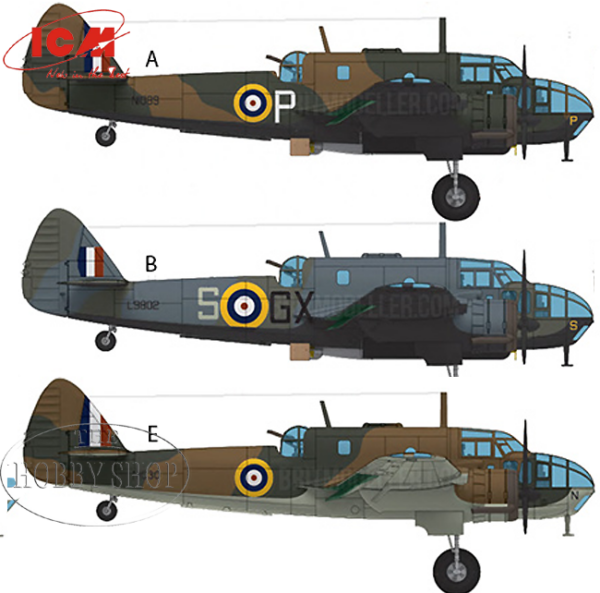
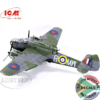
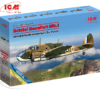
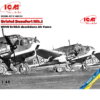
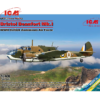
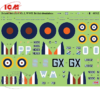
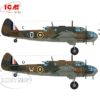
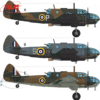
There are a generous five decal options included on the sheet, all but one of them having the early war green/brown camo on top, and grey, sky or black undersides. The different option is in green/grey with black undersides. From the box you can build one of the following:
N1089 or N1106 P, No.489 Sqn. RNZAF, Fall, 1941
L9802 GX-S, No.415 Sqn. RCAF, Thorney Island, November 1941
753 O, 36 Coastal Flight SAAF, Wingfield, Capetown, Spring 1942
761 W, 27 Coastal Flight SAAF, Spring 1942
N1030, No.149 Sqn. RCAF, British Columbia, June 1943
The Beaufort was originally designed as a torpedo bomber by Bristol, using the experience they had gained in developing the then-excellent Blenheim. They were ready in time for the outbreak of WWII, and as well as their prescribed role, they were also used as light bombers, undertaking many ‘Rhubarb’ missions over enemy territory in the so-called ‘phony war’, undertaking daylight missions that saw heavy casualties, although the accidental loss tally outstripped combat losses, surprisingly. Roughly 1,200 were built in the UK, with the total being elevated to almost 2,000 by additional Australian-built airframes that were known as DAP Beauforts. They were rapidly overhauled by the German fighters and were withdrawn from frontline service as early as 1942, by which time they had also been tasked with Aerial mine-laying. From then on, they were assigned to serve away from the front, and saw extensive use as a trainer, which might go at least some of the way to explain the high attrition rate due to accidents.
A further development of the Beaufort was the Beaufighter, which used important components of the Beaufort that included the wings and engines, with a new cut-down fuselage that was comparatively low and streamlined, with a powerful cannon armament under the nose that was useful in its assigned duties as long-distance heavy fighter, and later nightfighter, where it excelled. Some obsolete Beauforts were even converted to Beaufighters to make further use of the shared parts, which gave many of the original airframes a more honourable end than they would otherwise have seen. In an attempt to improve on the original Mk.I that took up the majority of production, the designers created additional variants that used other engines, had faired over turrets when they were to be used as trainers, and even a project that saw the fitment of a pair of Merlin XX engine that didn’t achieve the desired effect, so was cancelled, in much the same manner as the Merlin powered Beaufighter that managed to be “underpowered” despite the pedigree of the engines that propelled it.